
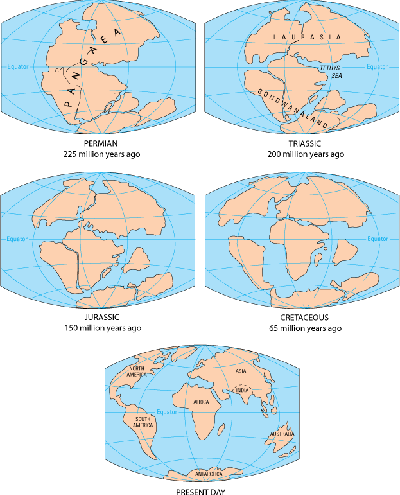
Image source: usgs.gov
My last post to flowtv.org described the work by Kevin Werbach, a legal professor at the UPenn’s Wharton School of Business. I first heard about him at this year’s Telecommunications Policy Research Conference. He is looking at how the different forces pull the Internet together as well as pushes them apart. I wrote about how it got me thinking about how the Internet is fractal, and how important is it to have models like Werbach’s to help explain it.
At first, because the Internet works so well as a decentralized network, Werbach’s suggestion of the idea of a fragmented network comprised of archipelagos and walled gardens seems unlikely and unwanted. However, Techcrunch is reporting that in China, attempt to access Google and Yahoo are getting redirected to the homegrown (and approved) Baidu. A chance of this kind of fragmentation is quite real, which could also mean that the ICANN testing of non-Roman language domain names might be too little, too late.


Pingback: weather pattern » Blog Archive » Is the “The Warhol Economy” good for the production of culture?
Pingback: weather pattern » Blog Archive » Controlling the Internet